

ComparisonApr 18, 2025
Generator Emissions Regulations Are Tightening
Diesel generator emissions face stricter regulations worldwide. Zero-emission hydrogen fuel cells offer a compliance-proof alternative.
5 min read
Diesel Generator Regulations Are Getting Stricter Every Year
If your organization relies on diesel generators, the regulatory environment is shifting beneath your feet. EPA Tier 4 standards, EU Stage V requirements, California CARB mandates, and municipal zero-emission zones are all tightening the noose on combustion-based portable power.
Zero-emission hydrogen fuel cells are not just environmentally preferable. They are becoming the regulatory path of least resistance. While diesel operators face escalating compliance costs, fuel cell operators face none.
Current Regulatory Landscape
United States
The EPA regulates stationary and portable diesel generators under different tiers. Current standards:
California consistently leads the regulatory curve. CARB's Portable Equipment Registration Program (PERP) requires permits for all portable diesel engines. The state's Zero-Emission Standard for backup generators is phasing in starting 2028, requiring new installations to be zero-emission.
Where California leads, other states follow. New York, Massachusetts, and Washington have proposed similar measures.
European Union
EU Stage V emission standards for non-road mobile machinery took full effect in 2020 and apply to generators used in construction, events, and emergency backup.
Several EU cities have established Low Emission Zones that restrict or ban diesel generators entirely. London, Paris, Amsterdam, and Berlin have implemented or announced generator restrictions for construction sites and events.
Canada
Environment and Climate Change Canada aligns closely with EPA standards. British Columbia and Quebec have additional provincial requirements. Metro Vancouver's emission bylaws affect generator operations in the region, directly relevant for organizations operating in the Richmond, BC area.
The Compliance Cost Burden
Meeting these regulations is expensive for diesel generator operators:
Projected Tightening
Each step increases the cost of owning and operating diesel generators. Organizations buying diesel generators today are buying into a depreciating regulatory position.
Hydrogen Fuel Cells: Zero Compliance Cost
Hydrogen fuel cells produce zero regulated emissions. No NOx. No particulates. No CO2. No carbon monoxide. The only byproduct is water vapor.
This means:
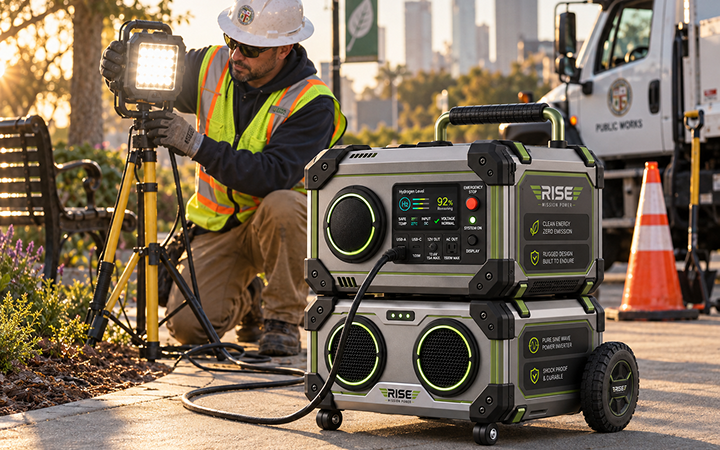
Rise Power's Rise-Titan generator and Rise-Sentinel portable fuel cell operate with zero emissions in any regulatory jurisdiction worldwide. No exemptions needed. No compliance costs. No regulatory risk.
- 01
No aftertreatment systems needed
- 02
No emission permits required
- 03
No monitoring or reporting obligations
- 04
No fuel quality mandates (hydrogen is hydrogen)
- 05
No risk of future non-compliance
- 06
No zero-emission zone restrictions
Industry Response
Several sectors are already transitioning:
Film and Events
Major film studios now require environmental impact reporting. Event venues in European cities mandate zero-emission power. Clean power for film production is becoming a requirement, not a preference.
Construction
Urban construction sites face the strictest generator regulations. New York City and London both require low-emission or zero-emission equipment on municipal construction projects. Private developers are following suit to meet ESG commitments.
Healthcare
Hospitals face a dual pressure: emission regulations on their diesel backup generators and sustainability commitments from healthcare system leadership. Emergency backup power is a prime target for hydrogen fuel cell adoption.
Defence
While military operations often receive regulatory exemptions, defence agencies are voluntarily pursuing clean energy for operational reasons: reduced fuel logistics, lower thermal signatures, and reduced dependency on contested fuel supply chains. Explore defence applications.
Making the Transition
Organizations currently dependent on diesel generators have three options:
For portable power applications under 5 kW, option 3 is already economically competitive when total cost of ownership is considered. Contact Rise Power for a regulatory impact assessment and transition plan.
- 01
Comply and absorb costs - Retrofit existing generators, buy compliant new units, pay for permits and monitoring. Costs escalate over time
- 02
Hybrid approach - Use fuel cells for loads under 5 kW, diesel for larger loads. Reduces compliance burden proportionally
- 03
Full transition - Replace diesel generators with hydrogen fuel cells where operationally feasible. Eliminates emission compliance entirely
FAQ
Are hydrogen fuel cells exempt from all emission regulations?
Yes. Because hydrogen fuel cells produce zero harmful emissions (only water vapor), they are exempt from all diesel/combustion emission regulations. There is no regulatory jurisdiction where zero emissions is non-compliant.
Will emission regulations affect emergency backup generators?
California's 2028 zero-emission requirement for new backup generator installations signals the direction. Emergency backup generators have historically received more lenient treatment, but that window is closing.
Do I need permits to operate hydrogen fuel cells?
No emission permits are required. Standard electrical and building permits apply as with any power system installation. Hydrogen storage may require fire code compliance depending on local jurisdiction.
How do emission regulations affect total cost of ownership for diesel?
Compliance costs add 15-30% to diesel generator TCO when you include aftertreatment, fuel quality requirements, DEF consumption, permits, and monitoring. This gap will widen as regulations tighten.
Can I get carbon credits for switching to hydrogen?
Potentially. Some jurisdictions offer carbon offset credits or clean energy incentives for replacing combustion equipment with zero-emission alternatives. Consult local regulations or contact Rise Power for guidance specific to your jurisdiction.
Related