
ApplicationsJun 8, 2025
Clean Portable Power for Film Production
Film and event production is shifting to clean portable power. Hydrogen fuel cells eliminate generator noise, fumes, and disruption on set.
5 min read
Silent Power Solves Film Production's Oldest Problem
Every film crew knows the frustration. The scene is set, actors are ready, and then someone yells "Kill the genny!" because the diesel generator drowning out dialogue. Generators get moved further away, longer cable runs are added, sound teams work overtime to remove rumble in post-production.
Hydrogen fuel cells eliminate this problem entirely. At under 70 dB, they are quieter than ambient conversation. No exhaust fumes drifting across set. No fuel spills on location. Production gets clean, quiet, reliable power without the compromises diesel generators force.
Why Film Production Needs Better Power
Location shoots depend heavily on portable generators. Lighting rigs, camera equipment, monitors, charging stations, craft services, hair and makeup stations, and climate control all draw power.
A typical feature film location uses 50-200 kW depending on the setup. But many individual loads are well under 5 kW, making them perfect candidates for fuel cell power.
The Diesel Problem on Set
Fuel Cells on Set: The Practical Advantages
Sound Recording
A hydrogen fuel cell running at under 70 dB can sit 20 feet from a sound recording setup without affecting audio quality. A diesel generator at 85 dBA needs to be 200+ feet away, with sound blankets, and still bleeds into sensitive microphones.
This saves money in two ways: no sound blanket rentals and rigging labor, and dramatically reduced audio post-production time cleaning up generator noise.
Interior and Enclosed Locations
Museums, historic buildings, hospitals, and residential interiors cannot have diesel generators running inside. The carbon monoxide risk alone prohibits it. Fuel cells produce only warm air and water vapor, making them safe for indoor operation.
This opens locations that were previously impossible or required expensive cable runs from generators parked outside.
Night Shoots in Residential Areas
Many municipalities have noise ordinances that restrict diesel generators during nighttime hours. A fuel cell operating below conversation levels eliminates noise complaints and permitting headaches.
Production Power Requirements
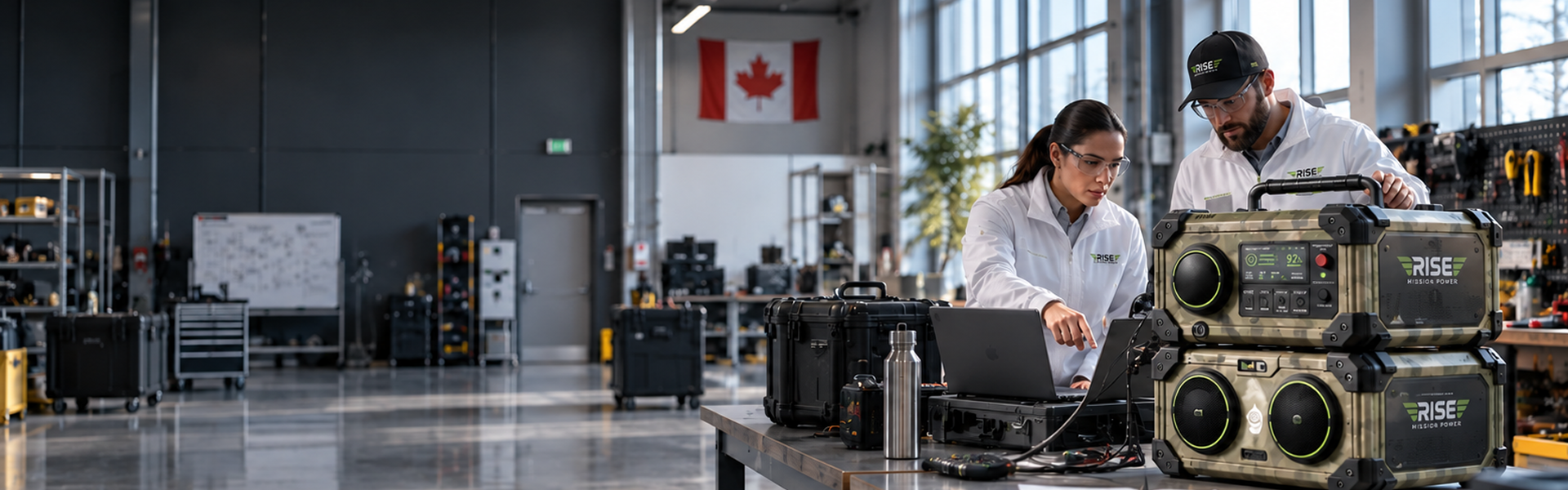
The lightweight Rise-Sentinel is particularly suited for camera department power, monitor feeds, and remote charging stations where hauling a diesel generator would be impractical.
Environmental and Permitting Benefits
Film industry sustainability commitments are accelerating. Major studios now require environmental impact reporting for productions. Several jurisdictions offer tax incentives for productions that minimize emissions.
Green hydrogen fuel cells produce zero emissions at point of use. This simplifies environmental reporting and strengthens permit applications for sensitive locations.
Location Access
Parks, wildlife areas, historic sites, and government buildings increasingly restrict or ban combustion generators. Fuel cells open these locations by eliminating the emissions, noise, and spill risks that trigger restrictions.
Event Production Applications
Concerts, festivals, corporate events, and live broadcasts face the same challenges as film production, often at larger scale.
For events in parks and public spaces, zero-emission power simplifies permitting and eliminates complaints from adjacent residents and businesses.
Cost Comparison
Diesel generator rental for film production typically runs $500-$2,000 per day depending on capacity, plus fuel, plus an operator. Sound post-production to remove generator noise can add thousands per episode or film.
Fuel cell rental costs are currently higher per day. But when you factor in eliminated sound post-production, reduced permitting costs, access to restricted locations, and no fuel spill liability, the total production cost often favors fuel cells.
Contact Rise Power for production rental pricing and availability.
FAQ
Can fuel cells power large lighting rigs?
For LED lighting setups under 5 kW, a single Rise-Titan or paired units handle the load. For high-wattage HMI rigs, fuel cells can power ancillary loads while diesel handles the heavy lighting, reducing overall diesel use and noise.
How long does a fuel cell run on a single charge?
The Rise-Sentinel delivers extended runtime via hydrogen cartridge swap. For a typical 12-14 hour shoot day, you may not need to swap cartridges at all. The Rise-Titan provides similar extended runtime for higher-power applications.
Are hydrogen fuel cells approved for indoor use on set?
Yes. Hydrogen fuel cells produce only warm air and water vapor. They have no carbon monoxide or other toxic exhaust, making them safe for enclosed spaces, stages, and interior locations.
How do production teams refuel on location?
Hydrogen cartridge swaps take seconds. Production teams carry spare cartridges the same way they carry spare batteries. No fuel truck needed. No spill containment. Learn about the Hydrogen Cartridge Kit.
What if the fuel cell fails during a take?
Fuel cells have no combustion and minimal moving parts, so mechanical failure is far less likely than with diesel generators. For critical applications, a backup unit can be kept on standby. The systems also provide consistent, clean power without the voltage fluctuations common in diesel generators.
Related