
TechnologyJul 28, 2025
Hydrogen Fuel Cell Maintenance Guide
Hydrogen fuel cells require far less maintenance than diesel generators. Here is what you actually need to do to keep them running.
3 min read
Fuel Cell Maintenance Is Measured in Minutes, Not Hours
One of the strongest operational advantages of hydrogen fuel cells over diesel generators is maintenance. Or rather, the near-absence of it. No oil changes. No filter replacements. No spark plugs. No belt tensioning. No carburetor cleaning.
A PEM fuel cell has no combustion and minimal moving parts. The maintenance burden drops by an estimated 80-90% compared to an equivalent diesel generator. For organizations that deploy power systems in remote or contested environments, this translates directly to less downtime and lower lifecycle costs.
Diesel vs Fuel Cell Maintenance Compared
The numbers speak for themselves. A diesel generator demands constant attention. A fuel cell largely takes care of itself.
What Fuel Cell Maintenance Actually Involves
Routine Checks (Every 500 Hours or Quarterly)
Periodic Service (Every 2000-5000 Hours)
Storage Preparation
If storing a fuel cell system for an extended period:
Field Maintenance Advantages
For defence applications, minimal maintenance is a force multiplier. Every hour a technician spends changing oil on a diesel generator is an hour not spent on mission tasks.
Consider a 30-day deployment:
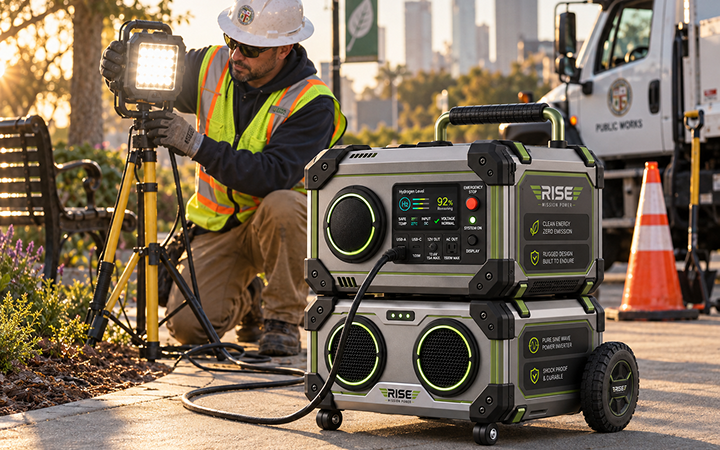
The Rise-Sentinel portable fuel cell delivers extended runtime via cartridge swap. Swap a cartridge, and runtime continues. No maintenance stop required.
Common Misconceptions
"Hydrogen systems are complicated to maintain"
The opposite is true. A diesel engine has hundreds of moving parts subject to wear, heat stress, and contamination. A PEM fuel cell stack has no combustion, no reciprocating parts, and operates at relatively low temperatures.
"You need specialized technicians"
Basic fuel cell maintenance requires less training than diesel generator maintenance. The systems are designed for operator-level care. Rise Power provides training and documentation for all products.
"Fuel cells degrade quickly"
Modern PEM fuel cells are rated for 5,000-20,000+ hours of operation depending on the application and duty cycle. Degradation is gradual and predictable, not sudden.
Extending Fuel Cell Lifespan
Three practices maximize fuel cell service life:
Total Cost of Ownership Impact
When you factor in maintenance labor, spare parts, unplanned downtime, and fuel logistics, hydrogen fuel cells deliver a lower total cost of ownership than diesel generators for most portable power applications under 5kW. Contact Rise Power for a TCO analysis specific to your operational requirements.
FAQ
How often do hydrogen fuel cells need servicing?
For systems like the Rise-Sentinel, routine visual checks every 500 hours or quarterly. Major service intervals are typically every 2,000-5,000 hours. Compare that to diesel generators requiring attention every 100-250 hours.
Can field operators perform fuel cell maintenance themselves?
Yes. Routine maintenance tasks are designed for operator-level execution. No specialized tools required for basic checks and cartridge swaps.
What is the most common fuel cell failure mode?
Membrane degradation from contaminated hydrogen or improper operating conditions. Using manufacturer-specified hydrogen cartridges virtually eliminates this risk.
Do fuel cells need winterization?
Fuel cells that operate in cold environments need freeze protection strategies for any residual water in the system. The Rise-Titan is rated for operation down to −22°C and handles cold-weather operation automatically.
How do I know when a fuel cell stack needs replacement?
Gradual voltage decline across cells indicates membrane aging. Most systems include diagnostics that track performance trends and alert operators before output drops below acceptable levels.
Related