
TechnologyAug 10, 2025
Green Hydrogen Explained: Production and Uses
Learn what green hydrogen is, how it differs from grey and blue hydrogen, and why it matters for portable clean energy and defence applications.
4 min read
Green Hydrogen Powers the Future of Clean Energy
Green hydrogen is hydrogen produced by splitting water using renewable electricity. No fossil fuels involved. No carbon emissions released. It is the cleanest form of hydrogen available, and it is the fuel behind the next generation of portable power systems.
For organizations that need reliable, deployable energy with zero emissions, green hydrogen changes everything. Defence agencies, hospitals, and emergency responders are already making the switch.
How Hydrogen Gets Its Color Labels
Not all hydrogen is created equal. The industry uses color codes to describe how hydrogen is produced.
Grey hydrogen accounts for roughly 95% of global production today. That is changing rapidly as electrolyzer costs fall and renewable electricity gets cheaper.
The Electrolysis Process
Green hydrogen production is straightforward. An electrolyzer passes electric current through water, splitting H2O into hydrogen and oxygen. The electricity comes from solar, wind, or hydroelectric sources.
Three main electrolyzer technologies exist:
PEM technology pairs naturally with variable renewable sources because it ramps up and down quickly. This makes it ideal for solar and wind-powered hydrogen production.
- 01
Alkaline electrolyzers - Mature technology, lowest cost, best for steady-state operation
- 02
PEM (Proton Exchange Membrane) - Faster response, compact, handles variable renewable input well
- 03
Solid oxide electrolyzers - Highest efficiency, operates at high temperatures, still scaling commercially
Why Green Hydrogen Matters for Portable Power
Traditional portable power relies on diesel or gasoline. These fuels are heavy, loud, emit toxic exhaust, and degrade over time. Green hydrogen stored in cartridges solves every one of these problems.
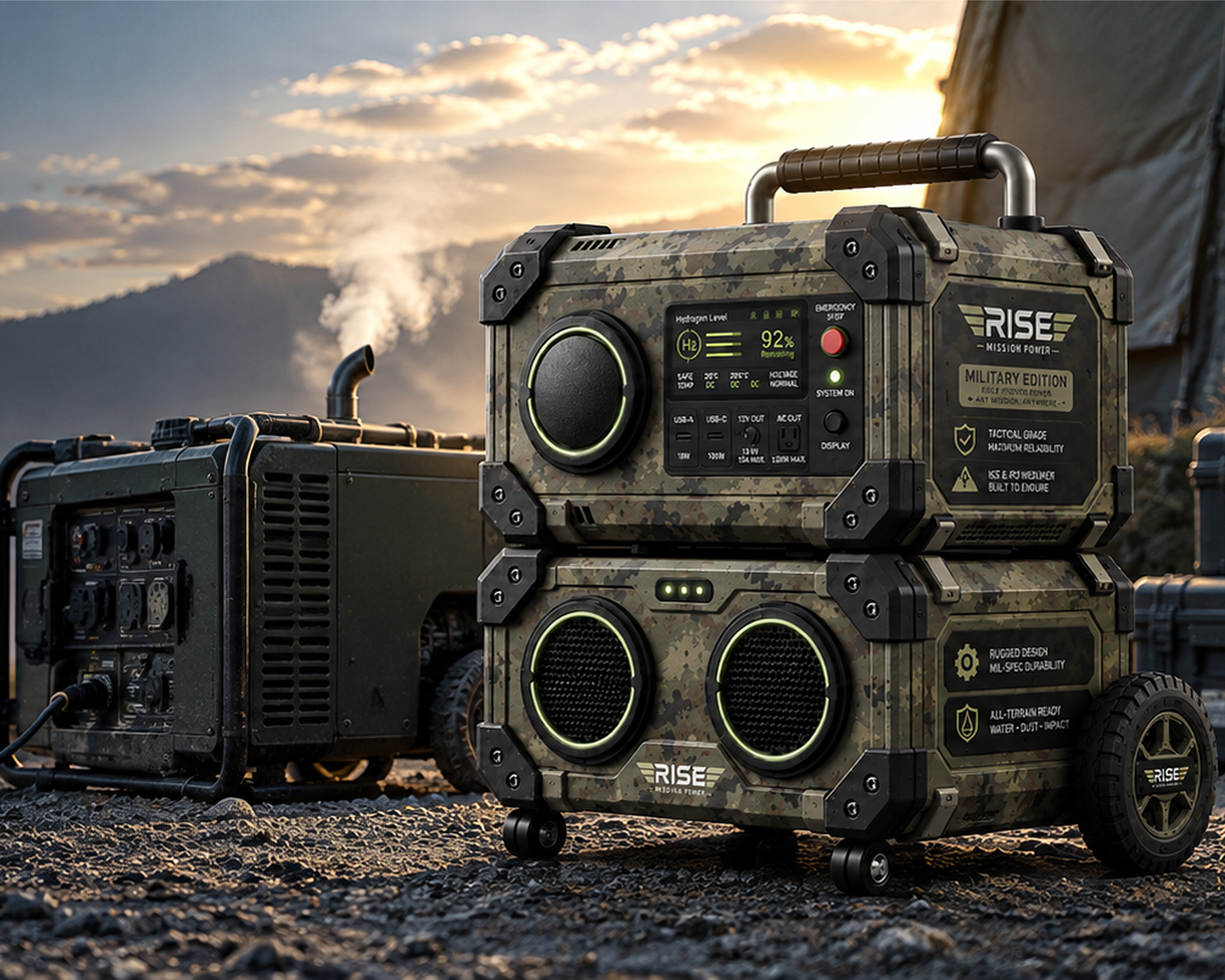
Rise Power's Hydrogen Cartridge Kit stores green hydrogen in compact, swappable cartridges with a 15-year shelf life. Compare that to diesel fuel, which degrades in 6-12 months.
Field Advantages
The Economics Are Shifting
Green hydrogen cost has dropped roughly 60% over the past decade. Bloomberg NEF projects green hydrogen will be cheaper than grey hydrogen in most markets by 2030.
Rising carbon prices and tightening emissions regulations are simultaneously increasing the cost of grey hydrogen, accelerating the crossover point.
Green Hydrogen in Defence and Emergency Response
NATO has identified green hydrogen as a strategic priority for reducing operational fuel dependency. Fuel convoys are a top vulnerability in theater. Every reduction in fuel transport reduces risk to personnel.
Green hydrogen cartridges can be pre-positioned years in advance without degradation. A forward operating base powered by Rise Power fuel cells eliminates generator noise that compromises position, exhaust that creates thermal signatures, and fuel convoy requirements that expose supply lines.
For emergency response, green hydrogen means hospitals and shelters get clean, quiet backup power that works safely indoors. No carbon monoxide risk. No fuel spill liability.
FAQ
Is green hydrogen safe to store and transport?
Yes. Hydrogen cartridges are designed for safe handling and transport. Rise Power's cartridges include RFID tracking and meet DOT transport standards. Hydrogen dissipates rapidly if released, unlike liquid fuels that pool and ignite.
How much water does green hydrogen production use?
Roughly 9 liters of water per kilogram of hydrogen produced. This is significantly less water than conventional power generation methods when you account for cooling water requirements.
Can green hydrogen be produced on-site?
Yes. Small-scale electrolyzers paired with solar panels can produce hydrogen at the point of use. This is particularly valuable for remote military installations and off-grid facilities.
Does green hydrogen work in extreme cold?
Rise Power's Rise-Titan generator operates from −22°C to +50°C. The hydrogen itself does not freeze. Cold-weather performance is actually an advantage over diesel, which gels in extreme cold.
How does green hydrogen compare to battery storage?
Hydrogen stores more energy per kilogram than lithium-ion batteries. For extended runtime applications (24+ hours), hydrogen fuel cells deliver better energy density and faster refueling than battery swaps. See our full comparison.
Related