

ComparisonMar 28, 2026
Hydrogen Fuel Cell vs Diesel Generator: Full Comparison
Compare hydrogen fuel cells and diesel generators on noise, emissions, weight, and runtime. See which wins for portable power.
3 min read
Why the Comparison Matters
Diesel generators have powered field operations for decades. But hydrogen fuel cells are changing the equation for defence, disaster response, and remote operations. The differences go beyond fuel type.
This guide breaks down hydrogen fuel cells vs diesel generators across every metric that matters for portable power.
How Each Technology Works
Diesel Generators
A diesel generator burns fuel to spin a mechanical alternator. This combustion process produces electricity, but also produces exhaust, heat, noise, and vibration.
Hydrogen Fuel Cells
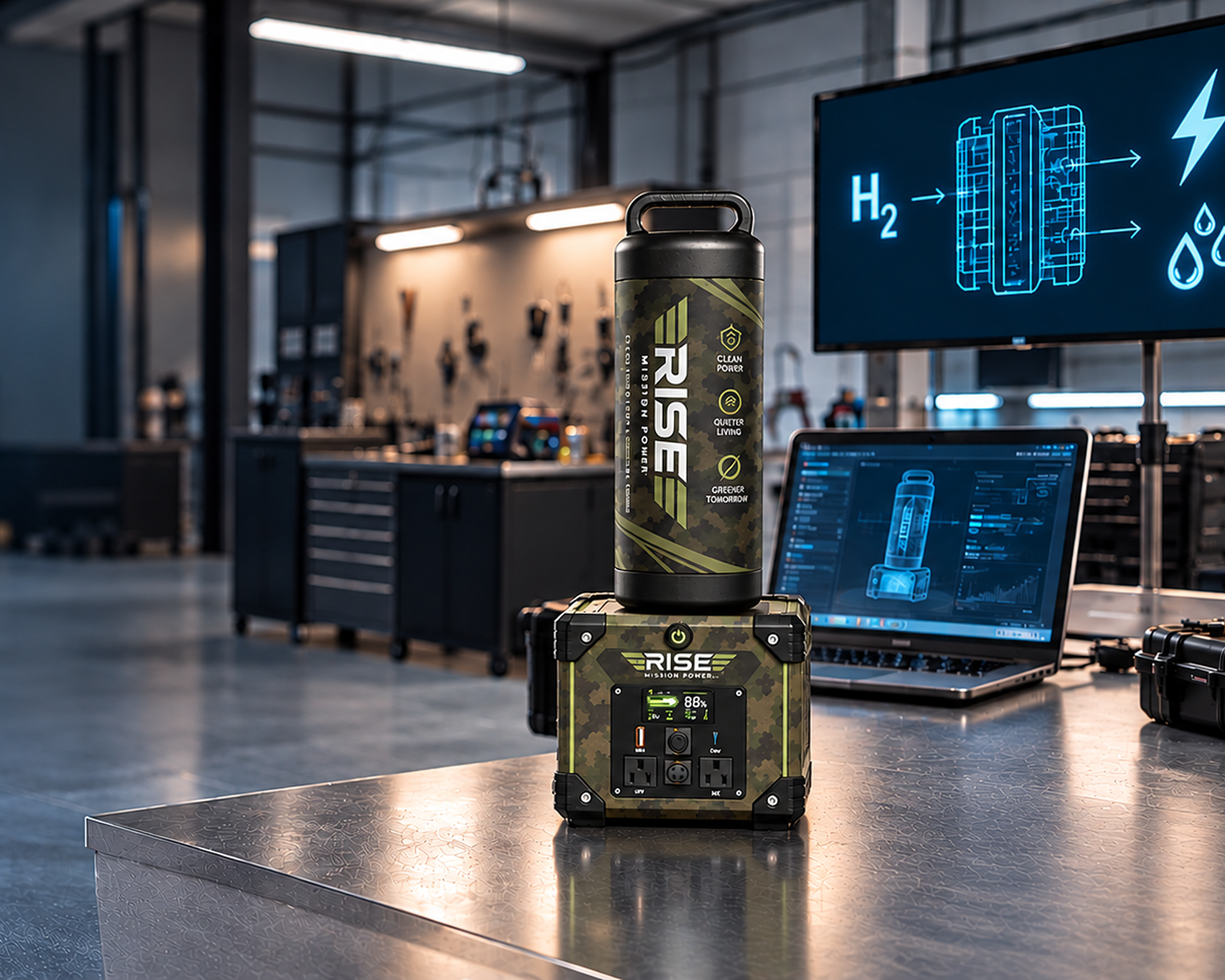
A hydrogen fuel cell converts hydrogen gas into electricity through an electrochemical reaction. The only byproducts are warm air and water vapor. No combustion. No moving parts in the power generation stack.
Head-to-Head Comparison
Noise: The Operational Advantage
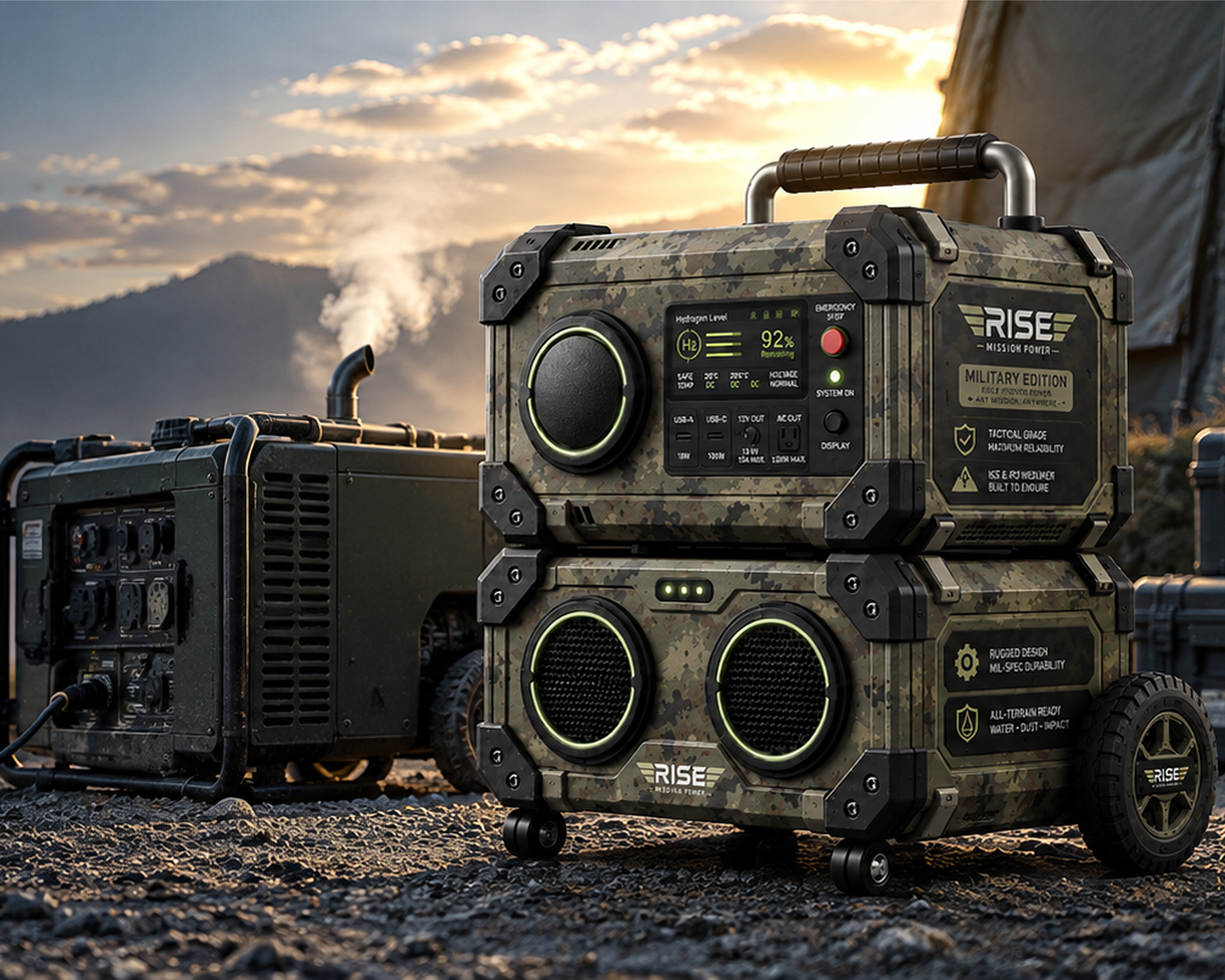
At under 65 dBA, a hydrogen fuel cell is quieter than a normal conversation. A diesel generator at 85 dBA is as loud as a lawn mower.
For military operations, this difference is mission-critical. Acoustic signature directly affects operational security. Forward operating bases, surveillance positions, and special operations all benefit from silent power.
For disaster response, quiet generators mean hospitals and shelters can operate without the constant drone of diesel engines.
Emissions and Indoor Safety
Diesel exhaust contains carbon monoxide, nitrogen oxides, and particulate matter. Running a diesel generator indoors can be fatal.
Hydrogen fuel cells produce only warm air and water. They can safely operate inside buildings, tents, underground facilities, and enclosed vehicles. This opens use cases that diesel simply cannot serve.
Total Cost of Ownership
Diesel generators have a lower upfront cost. But the total cost of ownership tells a different story:
When Diesel Still Makes Sense
Diesel generators still win on raw power output for large-scale, fixed installations where noise and emissions are acceptable. Construction sites, large industrial facilities, and situations with established diesel supply chains may still favor diesel.
But for portable, deployable power under 5kW, hydrogen fuel cells are now the superior choice for most defence and critical infrastructure applications.
FAQ
Is hydrogen fuel cell power reliable enough for military use?
Yes. Hydrogen fuel cells have no combustion, no moving parts in the power stack, and fewer failure modes than diesel engines. They operate in extreme temperatures from −22°C to +50°C and have been validated in field testing across demanding environments.
How do you refuel a hydrogen fuel cell in the field?
Modern hydrogen fuel cell systems use swappable cartridges. You remove the spent cartridge and insert a fresh one. No tools required. The process takes seconds and restores full runtime immediately.
Are hydrogen fuel cells safe?
Hydrogen fuel cells are safer than diesel generators in most scenarios. They produce no carbon monoxide, no flammable liquid fuel spills, and no hot exhaust surfaces. Hydrogen cartridges are engineered with leak-proof technology and have a 15+ year shelf life.
What is the shelf life of hydrogen fuel?
Hydrogen stored in modern cartridges has a shelf life of 15+ years. Compare this to diesel fuel, which degrades within 6-12 months and requires fuel stabilizers for longer storage.
Can hydrogen fuel cells work in cold weather?
Yes. Hydrogen fuel cells operate efficiently down to −22°C without the gelling problems that affect diesel fuel in cold climates. Performance remains consistent across the full temperature range.
Related