
TechnologyJan 15, 2026
PEM Fuel Cells Explained: How They Work
Learn how PEM fuel cells convert hydrogen to electricity with zero emissions. Simple breakdown of the science behind portable hydrogen power.
4 min read
Clean Electricity from a Chemical Reaction
A PEM fuel cell turns hydrogen into electricity, heat, and water. Nothing else. No combustion, no emissions, no noise from engine parts. This is the technology inside every Rise Power product, from the compact Rise-Sentinel Power Cube to the 1.5 kW Rise-Titan generator.
Here's how it works, explained without the jargon.
The Core Components
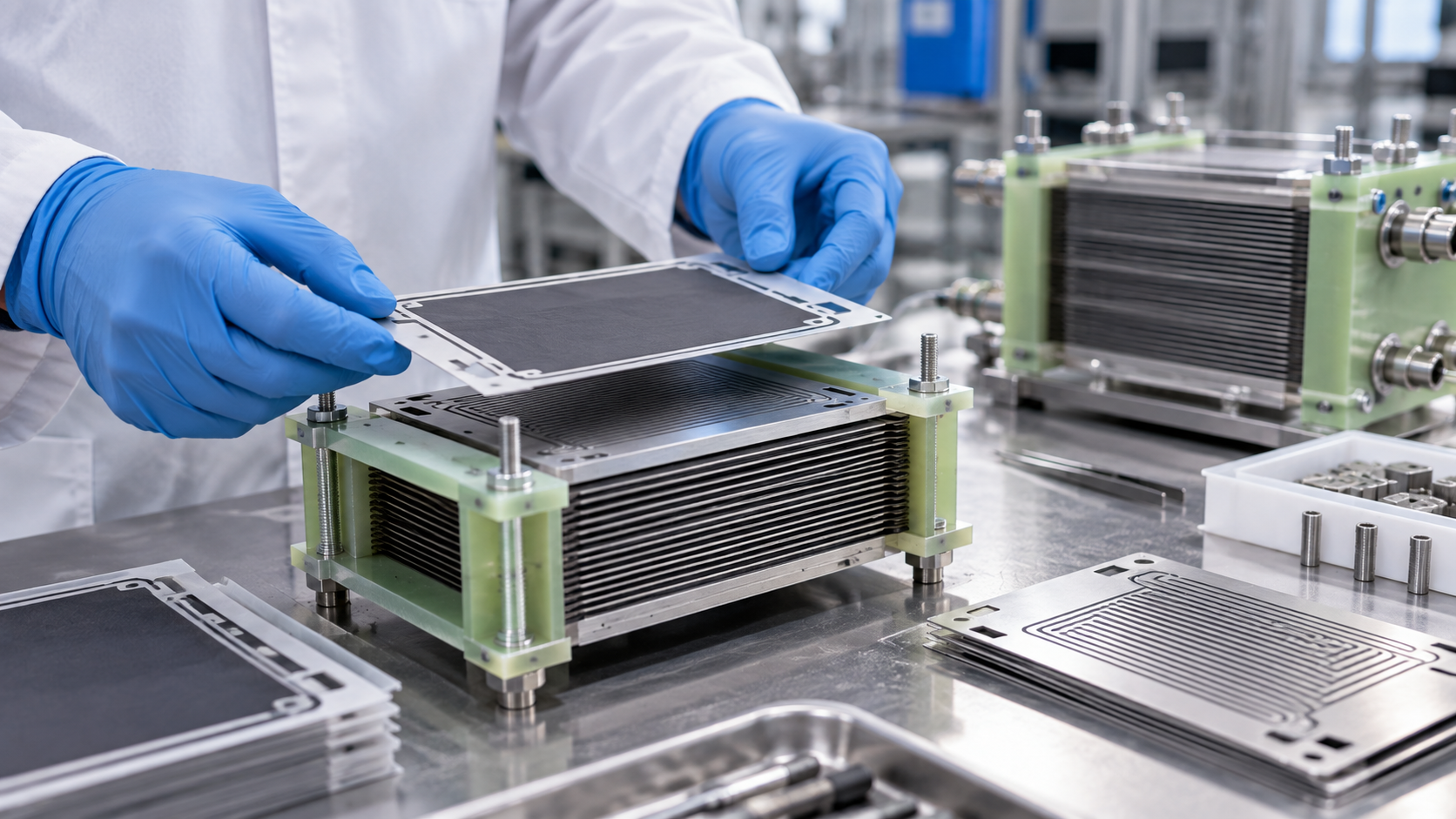
A PEM (Proton Exchange Membrane) fuel cell has five key parts:
The Reaction Step by Step
Step 1: Hydrogen In
Hydrogen gas (H2) flows into the anode side. The gas diffusion layer spreads it evenly across the catalyst surface.
Step 2: Split the Molecule
The platinum catalyst strips electrons from hydrogen molecules. Each H2 molecule splits into two protons (H+) and two electrons (e-).
Step 3: Electrons Take the Long Way
The membrane blocks electrons but lets protons through. Electrons are forced through an external circuit to reach the cathode. That flow of electrons is electricity.
Step 4: Reunion at the Cathode
Protons pass through the membrane. Electrons arrive via the circuit. Oxygen from ambient air meets them at the cathode catalyst. The three combine: 2H+ + 2e- + 1/2 O2 = H2O. Water and heat are the only outputs.
PEM vs Other Fuel Cell Types
Why PEM Wins for Portable Power
PEM fuel cells start in seconds, not minutes or hours. They operate at low temperatures, which means simpler thermal management and safer handling. Their high power density relative to weight makes them the only practical fuel cell technology for man-portable applications.
The low operating temperature also means PEM cells can use lightweight polymer materials instead of heavy ceramics. That's why the Rise-Sentinel is a compact Power Cube delivering extended runtime via cartridge swap.
Efficiency Numbers
A PEM fuel cell converts 40-60% of hydrogen's chemical energy into electricity. Combined heat and power (CHP) configurations push overall efficiency above 80%. For comparison:
Membrane: The Critical Innovation
The proton exchange membrane is what makes PEM technology possible. DuPont's Nafion membrane, developed in the 1960s, remains the gold standard. Modern membranes are thinner, more durable, and more conductive than early versions.
The membrane must stay hydrated to conduct protons effectively. Too dry and conductivity drops. Too wet and water floods the catalyst. Rise Power's fuel cell systems manage this water balance automatically, which is why they perform reliably from −22°C to +50°C.
What Fuels a PEM Fuel Cell?
PEM cells need hydrogen. The hydrogen can come from compressed gas tanks, metal hydride storage, or chemical hydride cartridges. Rise Power uses solid-state hydrogen storage in its Hydrogen Cartridge Kit, which eliminates the need for high-pressure tanks and makes transport and storage simple.
FAQ
How long does a PEM fuel cell last?
Modern PEM fuel cells last 5,000-20,000 hours depending on operating conditions. That translates to years of field use with proper maintenance.
Do PEM fuel cells work in the cold?
Yes. While the membrane needs some warmth to function optimally, PEM fuel cells generate their own heat during operation. Rise Power systems operate down to −22°C. The startup process includes a brief warm-up phase that takes seconds.
What maintenance do PEM fuel cells need?
Minimal. No oil changes, no filter replacements, no spark plugs. The main maintenance items are periodic membrane inspection and air filter replacement. Far less maintenance than any combustion generator.
Is the platinum catalyst expensive?
Platinum is the largest cost driver in PEM fuel cells. However, modern designs use far less platinum than early fuel cells. Catalyst loading has dropped from 4+ mg/cm2 in the 1990s to under 0.5 mg/cm2 today, cutting costs dramatically.
Can a PEM fuel cell run on natural gas or methanol?
Not directly. PEM cells require hydrogen. Some systems include a reformer that extracts hydrogen from natural gas or methanol, but this adds complexity, weight, and produces some CO2. For portable applications, direct hydrogen is cleaner and simpler.
Related