
DefenceJan 30, 2026
Hydrogen vs Lithium Batteries for Military Power
Hydrogen fuel cells outperform lithium batteries on runtime, weight, and logistics for military portable power. See the full comparison.
4 min read
Batteries Alone Can't Sustain the Modern Warfighter
A dismounted soldier carries 17+ pounds of batteries on a 72-hour mission. That weight slows movement, increases fatigue, and creates a logistics tail that stretches back to base. Hydrogen fuel cells cut that weight while extending runtime past what any battery pack can deliver.
This comparison covers every metric defence procurement teams care about when evaluating hydrogen fuel cells against lithium-ion and lithium-polymer batteries for portable military power.
How the Technologies Differ
Lithium-Ion / Lithium-Polymer Batteries
Lithium batteries store energy chemically and release it as electricity. Once depleted, they must be recharged from a power source. That recharge cycle takes hours and requires grid or generator access.
Hydrogen Fuel Cells
A hydrogen fuel cell generates electricity on demand from hydrogen gas through an electrochemical reaction. Swap in a fresh hydrogen cartridge and you're back at full power in seconds. No recharging. No downtime.
Side-by-Side Comparison
Weight: The Critical Factor
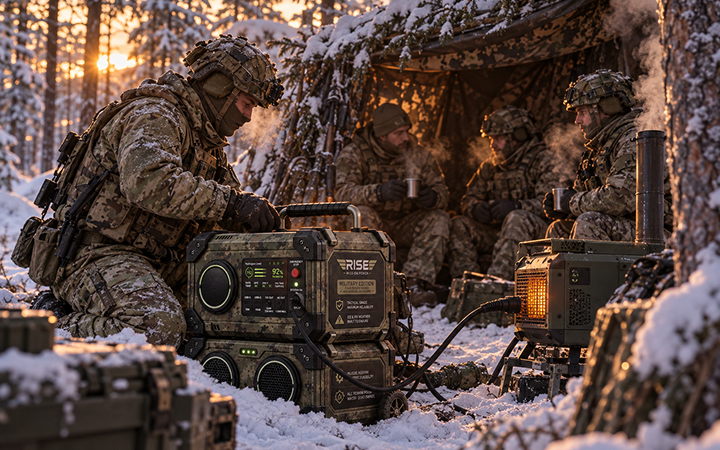
Every pound matters when soldiers operate on foot for days. Lithium battery packs for a 72-hour mission weigh 17-25 lbs depending on the power draw. The Rise-Sentinel is a lightweight Power Cube with extended runtime via cartridge swap. Swap cartridges to extend indefinitely without adding charging infrastructure.
Cold Weather Performance
Lithium batteries lose 20-40% of their capacity below freezing. In Arctic or high-altitude operations, that capacity loss can mean mission failure. Hydrogen fuel cells operate reliably down to −22°C. The electrochemical reaction generates its own heat, keeping the system functional in conditions that cripple battery packs.
Logistics and Resupply
Batteries create a hidden logistics burden. Every forward position needs charging stations, which need generators, which need diesel fuel. The chain grows fast. Hydrogen cartridges are compact, shelf-stable for 15 years, and require zero infrastructure. Drop-ship cartridges to any location and soldiers have instant power.
Rise Power's Hydrogen Cartridge Kit uses universal fuel cells with RFID tracking for real-time inventory management across the supply chain.
When Batteries Still Make Sense
Batteries excel for short-duration, low-power applications. Night-vision optics, handheld radios, and GPS devices that draw milliwatts are well-served by standard lithium cells. The crossover point comes when missions exceed 12 hours or power draw exceeds 50W sustained.
Hybrid Approach
The most effective field power systems combine both technologies. A hydrogen fuel cell provides sustained baseload power while a small lithium buffer handles peak loads. This hybrid approach cuts total carry weight while maintaining surge capacity for high-draw equipment like communications gear and electronic warfare systems.
FAQ
How long do hydrogen cartridges last in storage?
Rise Power's hydrogen cartridges maintain full capacity for 15 years with no maintenance. Lithium batteries degrade to 60-80% capacity within 2-3 years even in storage.
Are hydrogen fuel cells safe to carry in the field?
Yes. Hydrogen cartridges are sealed, non-pressurized solid-state systems. They don't leak, vent, or pose fire risk. Unlike lithium batteries, they have zero thermal runaway risk.
Can hydrogen fuel cells power the same devices as batteries?
Yes. Fuel cells output regulated DC power compatible with standard military power connectors. The Rise-Sentinel supports all common military electronics.
What happens if a hydrogen cartridge is damaged by shrapnel?
Solid-state hydrogen storage means no pressurized gas escapes. A damaged cartridge simply stops producing hydrogen. There's no explosion risk, no toxic gas release. Compare that to lithium batteries, which can catch fire when punctured.
How does cost per kWh compare?
Hydrogen fuel cells have a higher upfront cost but lower total cost of ownership over multi-year deployments. Eliminating charging infrastructure, generator fuel, and battery replacement cycles makes hydrogen more cost-effective for sustained operations. Contact our defence team for detailed TCO analysis.
Related